Grading & Markets
PSA Grading Backlog and Population Growth: What Modern Card Collectors Should Know
PSA paused Value tiers in June 2026 amid a 14M card backlog. What happens when the queue clears and cheap grading returns? Pop reports, slab supply, and market mechanics explained.
September 8, 2026 · 8 min read
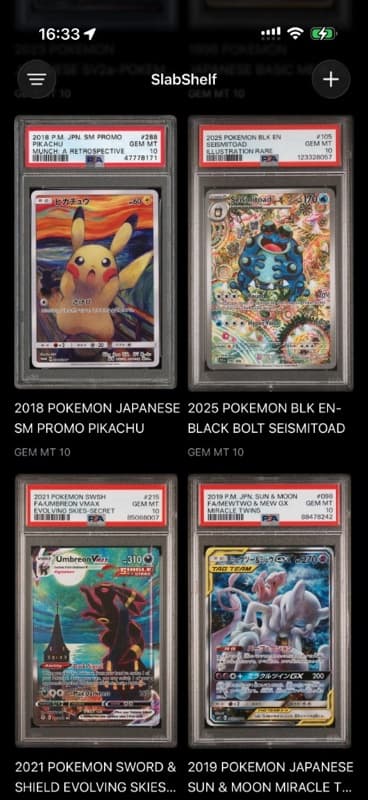
On June 2, 2026, PSA temporarily stopped accepting new submissions for its four Value service levels after the company's grading backlog approached 14 million cards. The pause closed off Value Bulk ($24.99), Value ($32.99), Value Plus ($49.99), and Value Max ($64.99) — the entire sub-$65 tier band that most modern Pokemon and sports card collectors rely on.
PSA has said it will reopen those tiers once the backlog falls below 5 million cards. As of September 8, 2026, the backlog stands at roughly 9.9 million, down from 14 million in early June but still far from the reopening threshold. For modern Pokemon card collectors, this backlog cycle is not just a service pause. It is a supply event that will show up in PSA population reports and affect how graded-card markets behave for cards submitted in 2024, 2025, and 2026.
What the PSA backlog pause actually means
PSA announced the pause on May 28, 2026, when the backlog sat at roughly 10 million cards. Collectors rushed to submit cards before the June 2 cutoff, pushing the queue to an estimated 14 million by early June. Since then, PSA has been grinding through the backlog while only accepting submissions at the higher-priced Regular ($80), Express ($150), Super Express ($300), and Walk-Through ($600) tiers.
Those higher tiers have remained open, but turnaround times have stretched. In late August 2026, Baseball America reported that the $80 Regular tier's estimated turnaround time had doubled from 30-40 business days to 70-80 business days. For collectors who typically grade modern pulls at Value or Value Bulk pricing, the pause means choosing between waiting indefinitely or paying significantly more per card.
PSA is tracking the backlog publicly and has committed to a benchmark-based reopening rather than a fixed date. The company's guidance projects it could take five to six months from June 2 to hit the sub-5M threshold, which would place reopening somewhere in the October-November 2026 range if the current pace holds. But the actual timeline depends on processing speed, incoming high-tier volume, and how quickly graded cards exit the queue.
Why modern Pokemon cards dominate the pipeline
Trade coverage from ICv2, Baseball America, and collector forums consistently cites Pokemon and modern sports cards as the primary drivers behind PSA's surge in submission volume. The pandemic accelerated collector interest, sealed product prices rose sharply, chase cards commanded premium raw prices, and grading became a standard part of the modern card lifecycle.
For Pokemon specifically, recent sets like Scarlet & Violet 151, Crown Zenith, Pokemon Go, Obsidian Flames, Paldean Fates, and Temporal Forces all featured SIR (Special Illustration Rare) chase cards, full-art trainer cards, alternate-art Pokemon, and nostalgic callbacks that drove both pack-opening volume and grading submissions. English sets with strong pull rates and Japanese sets with tight condition standards both contributed to the backlog.
Modern cards are typically submitted at Value tiers because the per-card declared value fits the pricing bands, turnaround time expectations are flexible, and collectors can group multiple cards from the same set or opening session into one bulk submission. When that entire tier band shut down, millions of modern cards that would have entered the queue in June, July, August, and September 2026 were either delayed, submitted at higher cost, or held raw.
What happens when Value tiers reopen
The reopening of Value tiers is not just about access. It is a supply restart. When cheap grading becomes available again, collectors who have been holding raw modern cards for months will submit in large batches. Stores, breakers, and bulk graders who paused submissions during the Value shutdown will resume normal operations. The result will be a new wave of grading volume flowing into the system.
This wave will show up in PSA population reports as soon as those submissions return. For cards released in late 2025 and 2026, the population freeze created by the Value pause will end. Cards that looked scarce in July or August 2026 because few people were willing to pay $80+ to grade them may suddenly show population growth as Value submissions clear.
For collectors holding PSA 10 modern slabs purchased during the pause, this dynamic creates a timing question: did you buy a card with lasting scarcity, or did you pay a premium during a temporary data gap? The answer depends on the card's actual pull rate, print run, demand level, and how many people were waiting to submit copies once Value tiers reopened.
Population reports and the slab return lag
Even after the backlog falls below 5 million and Value tiers reopen, there will be a multi-month lag before newly graded slabs appear in population data. Cards submitted in late 2026 may not return until early or mid-2027, depending on turnaround times. During that window, pop reports will remain stale, and buyers may continue to underestimate future supply.
This lag is most pronounced for high-volume modern cards. A popular SIR chase card from a 2025 or 2026 set may have a PSA 10 population of 500 in September 2026, but that number reflects grading activity before the Value pause. If thousands of collectors have been holding raw copies waiting for cheap grading to return, the PSA 10 population could double or triple once those submissions process.
For vintage cards, the effect is smaller. Older cards have limited raw supply, fewer submissions per year, and collectors are more likely to absorb higher grading costs because the cards themselves carry higher declared values. But for modern cards released in the last two years, the backlog cycle is a meaningful supply distortion.
How backlog clearance affects gem-rate modern cards
Modern Pokemon cards, especially English and Japanese releases from major sets, often achieve high PSA 10 rates because the cards come straight from fresh packs, collectors handle them carefully, and modern print quality is generally strong. When cheap grading is available, this high gem rate translates into large PSA 10 populations.
During the Value pause, only the most confident raw cards — or the most expensive ones — were worth grading at $80+ per card. Many marginal PSA 10 candidates stayed raw. When Value tiers reopen, those marginal candidates will enter the queue, and a meaningful percentage will grade PSA 10. This will compress the premium that PSA 10 commands over PSA 9 for high-print modern cards.
For cards with strong character demand or iconic artwork, PSA 10 premiums may hold because liquidity and collector preference stay high. But for mid-tier chase cards, common full-arts, or cards with weak secondary demand, the gap between PSA 9 and PSA 10 prices may narrow as the PSA 10 population expands post-reopening.
Market mechanics: raw vs. slab timing during the pause
The Value tier pause changed the math for raw card holders and slab flippers. Before the pause, a collector could buy a raw modern chase card for $50, grade it at Value for $33, wait a few months, and sell the PSA 10 slab for $150-200. The $80+ Regular tier pricing made that flip less attractive unless the card's raw price had already dropped or the PSA 10 spread was wide enough to justify the cost.
For collectors who already owned graded PSA 10 modern slabs during the pause, the reduced grading flow temporarily tightened slab supply. Fewer new PSA 10s entered the market each week, which could support asking prices — but only if demand held steady. For cards with thin buyer interest, the supply tightening did not matter because liquidity was already low.
The market implication is straightforward: cards graded during the Value pause likely faced less competition from newly graded copies. Cards graded after Value tiers reopen will enter a more crowded slab market. For modern cards with high pull rates and strong submission intent, the post-reopening environment will be more buyer-friendly.
Reading population data during the backlog cycle
When reading PSA population reports for modern cards in late 2026, remember that the data reflects grading activity before and during the Value pause, not the full latent supply of raw cards waiting to be graded. A low PSA 10 population today may look scarce, but if the card is a recent release with strong pack-opening volume, that scarcity may be temporary.
To adjust for this, look at the card's pull rate, set print run, and community interest. If the card is widely opened, highly sought after, and easy to handle, assume the PSA 10 population will grow significantly once Value grading resumes. If the card is from a lower-print Japanese set, has centering difficulty, or comes from a set that was not heavily opened, population growth may be slower.
Also check the submission date distribution if PSA provides it. A card with most submissions clustered before June 2026 is more likely to see a population jump once the backlog clears. A card with steady submissions across multiple years may have more stable population growth.
Practical checklist for collectors holding modern PSA slabs
If you own PSA 10 modern slabs purchased during the Value pause: check the card's release date, estimated pull rate, and current population. Cards from 2024-2026 sets with high pack-opening volume are more exposed to post-reopening population growth. Cards from lower-print releases, older sets, or sets with known centering issues face less risk.
If you are considering buying PSA 10 modern slabs: compare the current asking price to the PSA 9 price and recent sold listings. If the PSA 10 premium is narrow and the card is from a recent high-volume set, you may be better off waiting until Value submissions process and the PSA 10 population stabilizes.
If you are holding raw modern cards waiting to grade: track PSA's backlog updates and plan your submission timing. Submitting immediately after Value reopens may mean longer turnaround times due to the initial rush, but waiting too long could mean your cards compete with an even larger PSA 10 population.
For all collectors: treat population data as a snapshot, not a forecast. A low number today is interesting, but the rate of change and the reasons behind it matter more for pricing and holding decisions.
Why this matters for long-term Pokemon card collecting
The PSA backlog cycle is not a one-time disruption. It is a reminder that graded-card supply is not fixed. Population reports grow as collectors submit cards, grading companies process them, and those slabs enter circulation. For modern cards with large print runs and high collector interest, population growth is the default assumption unless something limits submissions.
Value tier pricing has historically been the on-ramp for modern card grading. When that on-ramp closes, grading slows. When it reopens, grading accelerates. Collectors who understand this cycle can make better decisions about when to buy graded cards, when to sell them, and when to submit raw cards for grading.
For cards released in 2024, 2025, and 2026, the backlog pause created a temporary scarcity window. That window will close as Value submissions return. Collectors who paid top dollar for low-pop modern PSA 10s during the pause should be prepared for population growth. Collectors who held off on grading raw cards or buying slabs may find better opportunities once the supply wave arrives.
FAQ: PSA Backlog & Population Growth
When will PSA Value tiers reopen? PSA has said Value tiers will reopen once the backlog falls below 5 million cards. As of September 8, 2026, the backlog is approximately 9.9 million. The company's original projection suggested a five-to-six-month timeline from June 2, which would place reopening in the October-November 2026 range if the current pace holds.
What is PSA's current backlog? As of September 8, 2026, PSA's active grading backlog is approximately 9.9 million cards, down from a peak of 14 million in early June 2026.
Why did PSA pause Value grading? PSA paused Value Bulk, Value, Value Plus, and Value Max tiers on June 2, 2026, to manage a growing backlog and protect turnaround time commitments for existing submissions. The backlog was driven by sustained high submission volume, particularly from modern Pokemon and sports card collectors.
Which PSA tiers are still open? Regular ($80), Express ($150), Super Express ($300), and Walk-Through ($600) tiers remain open. However, turnaround times for the Regular tier have increased significantly due to ongoing backlog pressure.
How does the backlog affect PSA population reports? The backlog delays when newly graded cards appear in population reports. Cards submitted before the Value pause may still be processing. Cards submitted after the pause at higher tiers will appear sooner, but the pause has reduced overall grading volume, which temporarily slows population growth for modern cards.
Will PSA 10 populations grow when Value tiers reopen? For modern cards released in 2024-2026 with high pack-opening volume and strong submission intent, yes. Many collectors have been holding raw cards waiting for cheap grading to return. Once Value tiers reopen, those cards will enter the queue, and a significant percentage will grade PSA 10.
Should I buy modern PSA 10 slabs now or wait? It depends on the card. For recent high-volume releases, waiting until Value submissions process may offer better prices as PSA 10 supply increases. For lower-print sets, older cards, or cards with strong demand and limited raw supply, the backlog cycle may have less impact.
How does the backlog affect raw card prices? The pause has kept some raw modern card prices elevated because cheap grading is unavailable. When Value tiers reopen, collectors who were holding raw cards may sell them or grade them, which could increase both raw and graded supply.
What should I do with my modern PSA 10 slabs? Hold if the card has strong demand, iconic artwork, low pull rate, or comes from a set with limited ongoing submissions. Consider selling if the card is from a recent high-volume set, has a narrow PSA 10 premium over PSA 9, and shows signs of weak liquidity.
Where can I track PSA backlog updates? PSA posts backlog updates on its website and through trade coverage from outlets like Baseball America, Beckett, and ICv2. Slabox also links to PSA support pages and can help you organize cert numbers and population data for your collection.