PSA Basics
What Is a PSA Cert Number, and Why Should You Check It?
Learn what a PSA cert number means, where to find it, and how collectors use cert lookup before buying or sharing graded cards.
May 24, 2026 · 8 min read
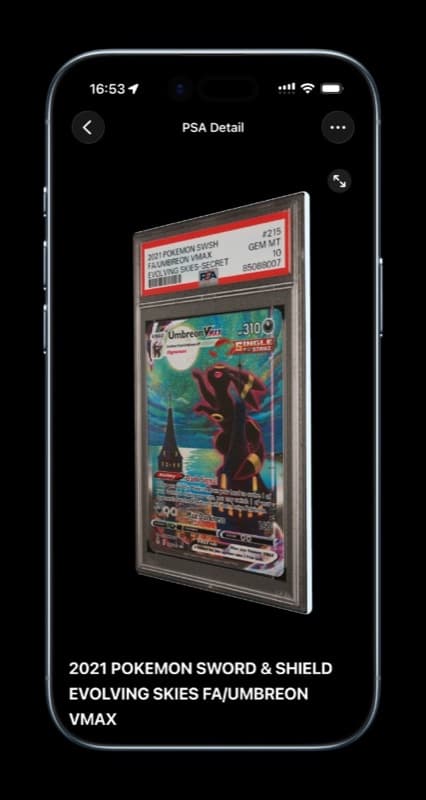
Every PSA slab has a certification number. It looks like a small line of digits on the label, but for collectors it is one of the most important identifiers on the whole holder.
A PSA cert number connects the physical slab in your hand to PSA's database record. Before you buy, sell, catalog, insure, or share a graded card, checking that number helps you confirm that the label, grade, and card details make sense together.
Where to find the cert number
On most PSA slabs, the cert number appears on the front label near the barcode or QR-style code. It is usually printed as a sequence of digits.
That number is not the grade, set number, or card number. It is the unique identifier for that specific graded item.
Why collectors check it
A cert lookup can confirm the card title, grade, label details, and sometimes images. It is a quick way to catch obvious listing mistakes before you commit to a purchase.
It also helps when you are organizing your own slabs. Instead of typing the whole card name, you can use the cert as the anchor for the record.
Use it, but do not overshare it
Cert numbers are useful, but many collectors prefer to hide them in public posts. That keeps your listing photos cleaner and avoids unnecessary copying of your slab data.
Slabox can scan PSA cert numbers for your private collection and create share images where the cert can be masked when you post online.
What the cert number identifies
The PSA cert number identifies a specific authenticated and graded item. It is not the Pokemon card number, not the set number, and not the grade. Two copies of the same Charizard, Pikachu, or Umbreon can have the same card number and the same PSA grade, but each slab should have its own PSA certification record.
That matters once your collection grows. If you own multiple PSA 10 copies of the same card, the cert number lets you tell which one was purchased first, which one has better eye appeal, which one has population data attached in your notes, and which one you already shared online.
What PSA cert lookup can confirm
A cert lookup can confirm the card title, grade, certification number, and label details recorded by PSA. Many modern records may also show images or related card information. That is useful because marketplace titles are often written by sellers, not by PSA, and sellers can make mistakes with language version, parallel name, set name, or card number.
For Pokemon cards, small details matter. A Japanese promo, an English secret rare, a Traditional Chinese release, and a different artwork from the same character can look similar in a thumbnail. Cert lookup gives you another way to verify whether the listing title matches the graded card.
The lookup is also helpful for price research. Once you know the exact card and grade, you can compare recent sold listings more cleanly. A PSA 10 card with a similar name but a different language, stamp, set, or rarity should not be treated as the same comp.
What cert lookup cannot guarantee
Cert lookup is an important safety step, but it is not a complete authentication process for an online purchase. PSA warns collectors that confirming a certification number does not eliminate all risk, because bad actors may copy real certification numbers from public sources and use them on counterfeit labels or misleading listings.
That means you should use cert lookup together with visual checks. Look at the slab, label alignment, barcode area, card image, grade, font, holder condition, and seller history. If a listing shows a real cert number but the slab photo looks wrong, the cert match alone should not make you comfortable.
The safest habit is to treat cert lookup as a verification layer, not a shortcut. It can catch obvious mismatches quickly, but your purchase decision should still include seller reputation, price realism, return policy, payment protection, and the quality of the photos.
A quick pre-purchase checklist
Before buying a PSA graded Pokemon card, start by searching the cert number and confirming the card name, grade, and label details. Then compare those details against the listing title, the slab photo, and the asking price. If any of those pieces disagree, pause before assuming the seller simply made a harmless typo.
Next, check whether the card version is exactly what you want. Language, set, promo stamp, reverse holo treatment, special art rarity, and first-edition status can all change collector demand. If you are buying for a registry set, language run, or specific artwork collection, those details are not optional.
Finally, save the cert number as soon as you buy the card. If the listing disappears later, your own collection record should still preserve the number, purchase date, price, seller, and any notes about why you bought that copy.
How to use cert numbers in your collection
A cert number is a clean anchor for a digital collection. Instead of relying only on long card names, you can use the cert as the stable record for each slab, then attach grade, language, set, population data, purchase cost, images, and personal notes.
This becomes more important as a collection grows. Ten slabs are easy to remember. Fifty slabs start to blend together. A few hundred slabs without cert tracking can become difficult to search, insure, price, or share accurately.
Slabox is built around that workflow: scan the PSA slab, save the cert-based card record, organize it into folders, and keep important details close to the card instead of scattered across screenshots, spreadsheets, and marketplace receipts.
Common cert lookup mistakes
The most common mistake is checking only that a cert number exists. A real number is not enough; the card details must match the slab being sold. The second mistake is ignoring language or set differences because the character and grade look right. For Pokemon cards, those details can change value dramatically.
Another mistake is losing the cert after purchase. If you only keep a photo in your camera roll, it becomes hard to find later. Put the cert into your collection record while the purchase is fresh, especially for higher-value cards or cards you may eventually sell.
A final mistake is publishing every cert by default. Public cert exposure is not always dangerous, but it is not always necessary either. Treat the number like useful collection metadata: valuable to store, useful to verify, and worth controlling when you share.
FAQ
Is the PSA cert number the same as the card number? No. The card number is printed by the card manufacturer as part of the set. The PSA cert number identifies the graded item inside PSA's certification database.
Can two identical cards have different cert numbers? Yes. Each graded copy receives its own certification record, even if the card, language, set, and grade are identical.
Does a matching cert prove a slab is genuine? It is a strong verification step, but it does not remove all risk. Always compare the database result with slab photos, seller history, and price context.
Should I store cert numbers for cards I never plan to sell? Yes. Cert numbers make your collection easier to search, document, insure, and share, even if you collect only for personal enjoyment.