Grading Prep
Card Centering Before Grading: A Simple Collector Checklist
Check Pokemon card centering before grading with border ratios, PSA context, photo setup tips, and Slabox tools.
May 26, 2026 · 8 min read
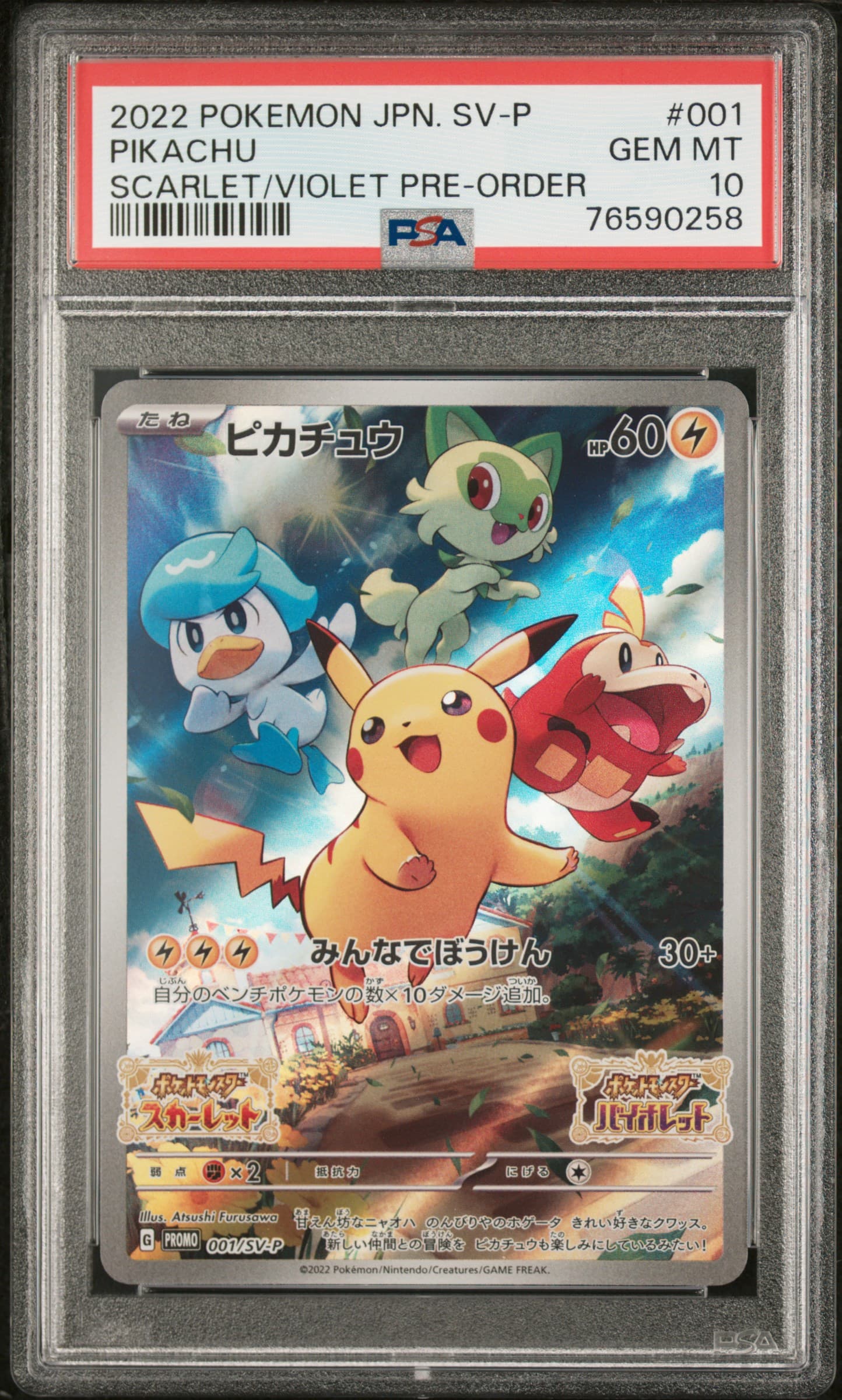
Centering is one of the easiest grading factors to see, and one of the easiest to ignore when you are excited about a card.
Before sending a raw card for grading, take a minute to look at the borders. It can save you from unrealistic expectations.
What centering means
Centering compares the border width on the left and right, then the top and bottom. A perfectly centered card has balanced borders on both axes.
A card can look clean, sharp, and glossy, but still lose grade potential if the borders are visibly uneven.
Check both directions
Collectors often notice left/right centering first, but top/bottom centering matters too. Some cards look fine in a binder and only reveal the issue when you measure them.
Good lighting and a straight photo help. Avoid judging from angled photos, because perspective can make one side look wider than it really is.
Use tools as a second opinion
A centering tool cannot guarantee a grade, but it can make your expectations more realistic before you submit a card.
Slabox includes a card centering tool that lets you mark borders from a photo and estimate how centering may affect PSA, BGS, or CGC outcomes.
Why centering matters so much
Centering is the easiest grading factor for collectors to see because it is visible from a normal front photo. Corners, edges, and surface often need close inspection, but uneven borders can stand out immediately.
PSA's published grading standards include numerical centering tolerances. For a PSA 10, the front image must be centered within approximately 55/45, with a looser 75/25 tolerance on the reverse. PSA 9 allows approximately 60/40 on the front and 90/10 on the reverse.
Those numbers do not mean centering is the only factor. They mean centering can set a ceiling. A card with perfect surface and sharp corners can still miss the top grade if one border is too heavy.
How to read a centering ratio
A centering ratio compares opposite borders. If the left border and right border are equal, the card is close to 50/50 left-right. If one side is wider, the ratio may look like 55/45, 60/40, or worse. The same logic applies to top-bottom centering.
Collectors often talk about the worse axis because it usually controls the grade risk. A card can be 51/49 left-right but 62/38 top-bottom. In that case, the top-bottom axis is the problem.
This is why a quick glance is useful but not enough for expensive submissions. If a card is close to your personal cutoff, measure both axes before assuming it is a strong PSA 10 candidate.
Take a straight photo first
Most bad centering checks start with a bad photo. If the card is tilted, angled, curled, or photographed from one side, perspective can make one border look wider than it really is.
Place the card on a flat surface, use even light, keep the phone parallel to the card, and avoid shadows on the edges. If the card is sleeved, make sure the sleeve edge is not being mistaken for the card border.
For slabbed cards, glare and slab edges can make measurement harder. Try a slight lighting change rather than an angled camera. You want the card straight, not just glare-free.
Check corners, edges, and surface too
Centering is only one grading factor. PSA also evaluates corners, edges, focus, gloss, staining, print defects, and other condition issues. A card with strong centering can still miss PSA 10 because of whitening, a soft corner, a print line, or a small surface indentation.
That is why centering should be your first screen, not your only screen. If the card is clearly outside your target centering range, you can save time. If it passes centering, continue with close inspection under good light.
For Pokemon cards with dark backs or dark borders, edge whitening is especially important. For holo cards, tilt the card slowly and look for scratches or print lines that do not appear in a straight-on photo.
When centering should stop a submission
If you are submitting only because you want a PSA 10, obvious off-centering should make you pause. A card can still be worth grading as a PSA 9, but the economics change when grading fees, shipping, insurance, and resale spread are included.
For personal collection cards, the decision can be different. A favorite childhood card, signed memory, or hard-to-find artwork may be worth encapsulating even if the centering is not perfect.
The question is not simply: will this grade high? The better question is: what result would still make me happy after paying to grade it?
Use Slabox before you submit
Slabox's centering tool is designed for the pre-grading stage. Upload a straight card photo, mark the relevant borders, and use the estimated ratio to decide whether the card belongs in your grading pile, binder, or raw collection.
The tool does not promise a final PSA, BGS, or CGC grade. It gives you a cleaner measurement so you are not relying only on excitement or a seller's photo.
Used together with cert lookup, population data, and purchase notes, centering estimates help you build a more disciplined grading workflow.
FAQ
Can a card with imperfect centering still get PSA 10? Yes, within PSA's published tolerance and if the rest of the card is strong. But centering that exceeds the tolerance can limit the grade.
Should I check the back centering? Yes, but the front standard is usually stricter for top grades. Still, a severely off-center back can matter.
Does a centering app guarantee the grade? No. It only helps measure one factor. Surface, corners, edges, print quality, and authenticity still matter.
Should I grade an off-center card? Maybe, if the card is rare, personally meaningful, or still valuable in a lower grade. Do not submit it expecting a top grade if the centering is clearly outside the target range.